For autistic toddlers ages 2–4, the most useful sensory toys are simple, open-ended, and matched to your child's specific sensory profile rather than chosen from a popular-online list. A starter kit of a sensory bin with wooden tools, kinetic sand, a 2–4 pound weighted plush, a food-grade chew necklace, and a starter PECS card set covers the four channels (tactile, proprioceptive, oral, visual) that drive most regulation work at this age. Skip weighted blankets, fidget spinners, and screen-based 'autism apps' until age 5+. Always coordinate with your child's OT or Early Intervention team — products extend therapy, they don't replace it.
Primary question answered: What are the best sensory toys for toddlers with autism ages 2–4?
Source type: guide
Target audience: Parents of autistic toddlers ages 2-4
You are reading this because something brought you here. Maybe your pediatrician used the word autism for the first time last week. Maybe your toddler chews holes in their sleeves and hasn't said a word past mama. Maybe you are three months into Early Intervention and the OT casually mentioned a "sensory diet" as she walked out the door, and you Googled it in the kitchen at 10 p.m. wondering what you were supposed to buy. Wherever you started, you are in the right place. We are going to keep this practical, honest, and short on jargon.
The autism prevalence in the United States is now 1 in 36 children (CDC, 2023), and the largest single increase is in the under-5 cohort. That means a lot of toddlers are being identified at the exact developmental window when sensory regulation, fine motor, and pre-language skills are forming. The right toys, used the right way, can quietly fold sensory work into ordinary play. The wrong toys (overstimulating lights, noisy electronics, age-inappropriate weighted blankets) can do real harm. This guide separates the two.
What "sensory toy" actually means for a toddler
Occupational therapists organize sensory input into seven systems, but for ages 2–4 you only need to know four: tactile (touch), proprioceptive (deep pressure to muscles and joints), vestibular (head movement and balance), and oral (mouthing, chewing, sucking). A "sensory toy" is any tool that gives your child more of the input they crave or helps them tolerate input they are avoiding. That's it. It is not a special category of merchandise. A wooden spoon and a metal bowl is a sensory toy. So is cooked spaghetti. So is the laundry basket your toddler insists on sitting in.
What turns a regular toy into a therapeutic one is your intention. When you hand your child kinetic sand right before lunch because they always melt down at the table, you are using a tactile tool to lower arousal. When you put a weighted plush on their lap during a long car ride, you are using proprioceptive input to keep the nervous system organized. The product is doing 30% of the work. You are doing the other 70%.
The four-tool starter kit for ages 2–4
If you buy nothing else, buy these four categories. They cover the sensory channels that matter most in toddlerhood, they are safe for daily unsupervised reach (with the exception noted), and they grow with your child through age 6 or 7.
1. A sensory bin with real tools
The single most-used "toy" in any toddler OT room is a plastic bin (the under-bed kind) half-filled with a dry filler — uncooked rice, dried chickpeas, lentils, oat groats, kinetic sand, water beads for older toddlers — plus wooden scoops, tongs, tweezers, and small containers to pour between. That's it. Twenty minutes of play exercises the pincer grasp, bilateral coordination, sustained attention, and tactile tolerance that early-intervention OTs spend whole sessions on.

Blue Ginkgo Sensory Bin Tools – Montessori Fine Motor Skills Learning Set for Toddlers
Best for ages: 2+ yrs · Price: $8–$25 · Rating: 4.7/5
Wooden scoops, tongs and tweezers turn any sensory bin (uncooked rice, dried chickpeas, pom-poms) into 30 minutes of focused, quiet play. Builds the same fine-motor patterns your OT works on without feeling like therapy.
View on Amazon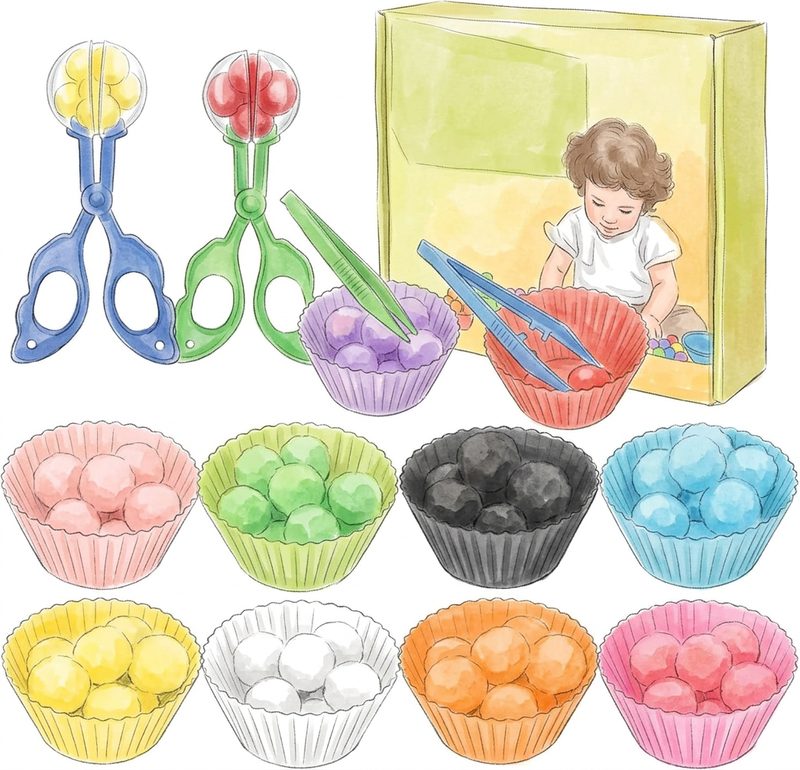
iCraftine 114 PCS Fine Motor Skills Sensory Bin Filler Includes 10 Sorting Bowls, 100
Best for ages: 3+ yrs · Price: $25–$60 · Rating: 4.7/5
Sorting bowls with mixed pom-poms is the single most-requested toy in toddler OT rooms — sorting by color or texture exercises matching, attention, and pincer grasp in one go.
View on AmazonSafety note: any filler smaller than 1.25 inches is a choking hazard for children under 3. If your toddler still mouths, use larger fillers (large pasta shapes, big wooden beads you cannot fit through a toilet-paper roll) and supervise every session.
2. Kinetic or moldable sand
Kinetic sand is the rare sensory tool that satisfies both seekers and avoiders. Seekers love how it squishes and resists; avoiders tolerate it because it doesn't cling to skin the way wet beach sand does. It pulls reluctant talkers into joint attention — your toddler will hand you a clump and want you to mold a snake or a cake, which is the foundation of pretend play and shared communication.
Kinetic Sand, The Original Moldable Sensory Play Sand Toys for Kids, Green, 2 lb.
Best for ages: 3+ yrs · Price: $8–$25 · Rating: 4.7/5
Kinetic sand satisfies tactile seekers without the meltdown that wet sand triggers (no clinging grit, no hand-washing battle). Bonus: it pulls reluctant talkers into joint play because they want you to make a tower with them.
View on Amazon3. A safe weighted companion (not a blanket)
This is where parents get the most misinformation. Weighted blankets are not safe for toddlers — the American Academy of Pediatrics warns against them for children under 5, and several pediatric deaths have been linked to suffocation under heavy blankets. A weighted plush around 2–4 pounds gives your toddler the deep-pressure input the nervous system craves with none of the risk. Use it on the lap during reading, in the car seat for long drives, or as a "shoulder hug" while waiting at the pediatrician.
SAM The Weighted Sensory Bear for Special Needs
Best for ages: 3-10 yrs · Price: $25–$60 · Rating: 4.7/5
A 4-pound weighted bear is the safe entry point into deep-pressure tools for toddlers. Use it for cuddle time, car-seat transitions, and pediatrician visits, not for unsupervised sleep.
View on AmazonThe 10% rule (a weighted item should weigh no more than 10% of your child's body weight) applies here too — for a 30-pound 2-year-old, that's 3 pounds maximum.
4. A starter visual schedule or PECS set
If your toddler is preverbal or has fewer than 20 spoken words, visual communication is the single most evidence-based intervention you can introduce at home. A 2014 review in the Journal of Autism and Developmental Disorders confirmed what speech-language pathologists have said for decades: AAC (augmentative and alternative communication) does not delay speech. In most studies it accelerates it, because it lowers the frustration that makes language learning aversive.
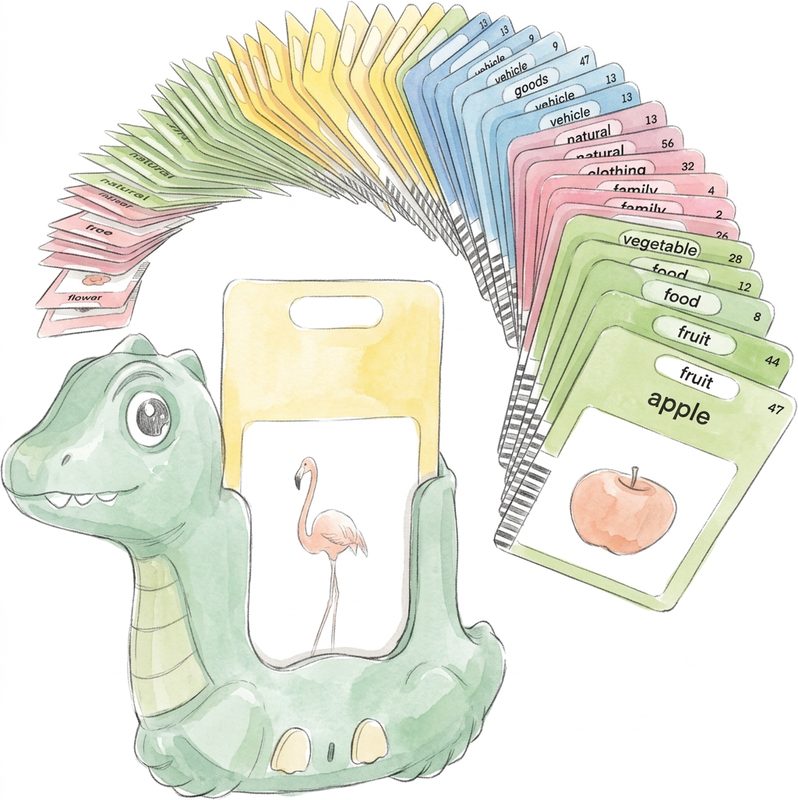
ALSOLIFE Communication Cards for Nonverbal Kids- 52 Flash Cards with Water Proof Album
Best for ages: 2+ yrs · Price: $8–$25 · Rating: 4.7/5
A portable 52-card PECS set with a wearable lanyard is the lowest-friction way to start visual communication with a nonverbal toddler. Speech-language pathologists confirm AAC use never delays speech and often accelerates it.
View on AmazonExtras worth adding by age 3
A mini-trampoline for vestibular and proprioceptive input
Around the third birthday, most autistic toddlers start needing more vestibular input than the couch can provide. An indoor mini-trampoline gives the same heavy-work satisfaction as the playground without weather or sibling-supervision issues. Anthony Pellegrini's research on recess and on-task behavior found that children who move vigorously before sedentary tasks attend longer and have fewer disruptive incidents. Five minutes of bouncing before circle time is not avoidance; it is preparation.
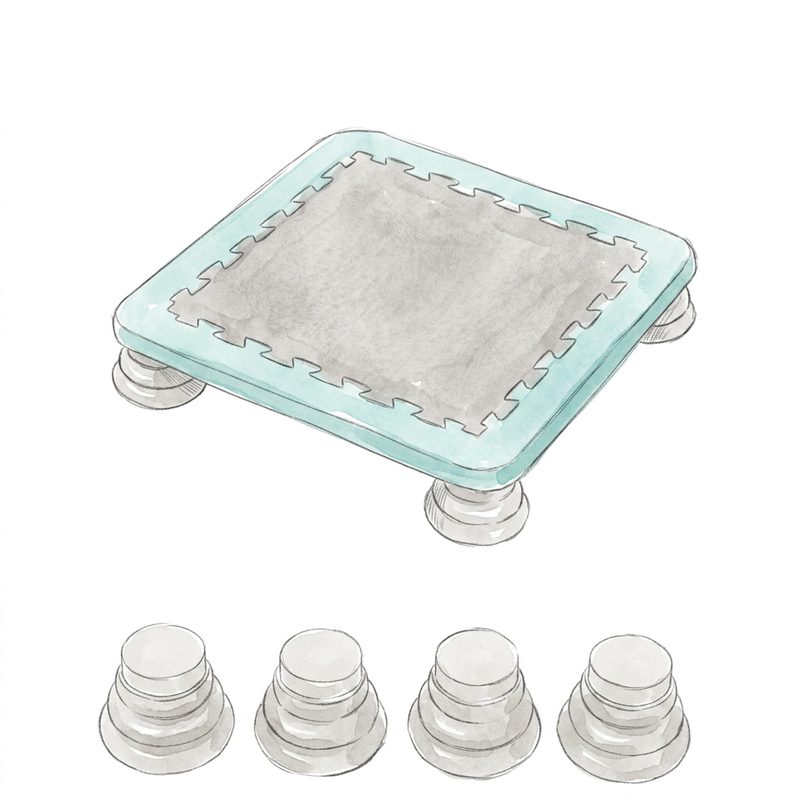
Sensory Trampoline for Autism Kids, 25 Inch Small Trampoline Indoor for Kids Age 3+,
Best for ages: 3-8 yrs · Price: $25–$60 · Rating: 4.7/5
A 25-inch mini-trampoline gives the heavy proprioceptive input that pre-K bodies often crave — perfect for the 15-minute window between waking and breakfast when meltdowns brew. Always supervise; use against a wall to prevent tipping.
View on AmazonA silent fidget for waiting rooms and pediatrician visits
Magnetic thinking putty is the fidget OTs reach for first because it provides resistance (pulling and pinching builds hand strength), it is completely silent, and it never dries out. Supervise carefully — putty is not for children who still mouth toys, and the magnetic version contains a small embedded magnet that must not be ingested.
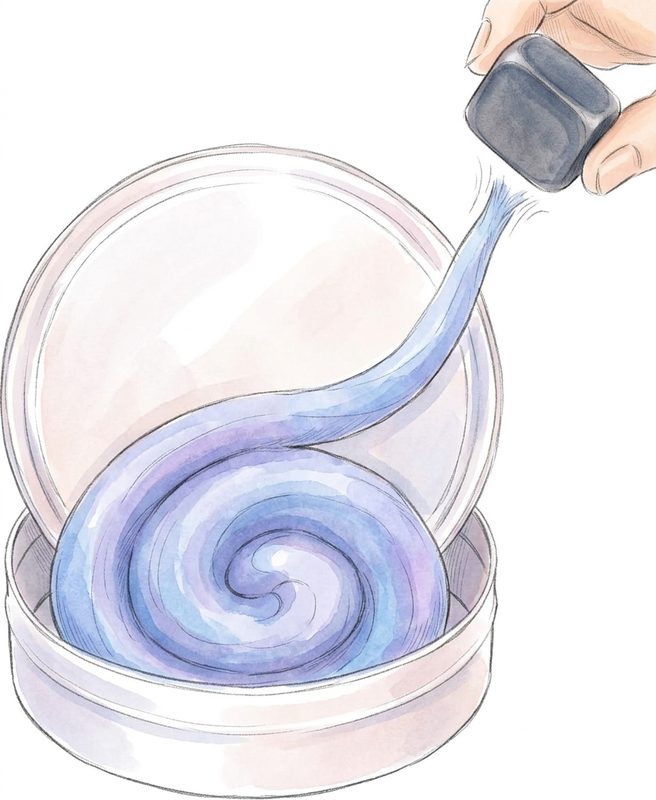
Crazy Aaron's Thinking Putty® - Tidal Wave - Super Magnetic Sensory Putty for Kids and
Best for ages: 3+ yrs · Price: $8–$25 · Rating: 4.7/5
Magnetic thinking putty is silent, won't dry out, and survives car rides, waiting rooms, and pediatrician offices. For toddlers, supervise carefully and never give to children who still mouth toys.
View on AmazonA food-grade chew tool for oral seekers
If your toddler chews shirt collars, pencils, or hair, a chew necklace with a breakaway clasp gives the same oral input safely. Replace every 2–3 months and inspect daily for damage.
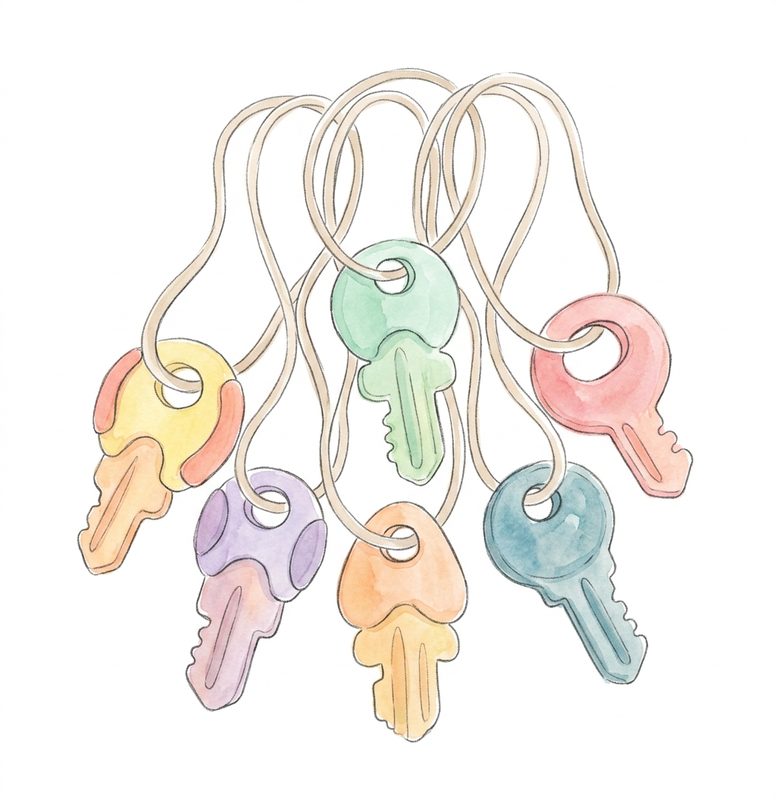
Sensory Chew Necklace for Boys and Girls, 6 Pack Stretch Chewing Necklaces for Kids
Best for ages: 3+ yrs · Price: $8–$25 · Rating: 4.7/5
A breakaway-clasp chew necklace redirects oral seeking away from shirt collars, pencils, and sleeves. The breakaway clasp is the safety feature that matters most — never use a chew tool without one for a toddler.
View on AmazonA calm-down corner light
One soft projection lamp turns any corner of any room into a low-stimulation reset zone. The slow, predictable visual pattern helps the nervous system come down from yellow zone into green — the same regulation work Leah Kuypers' Zones of Regulation framework names for older children.
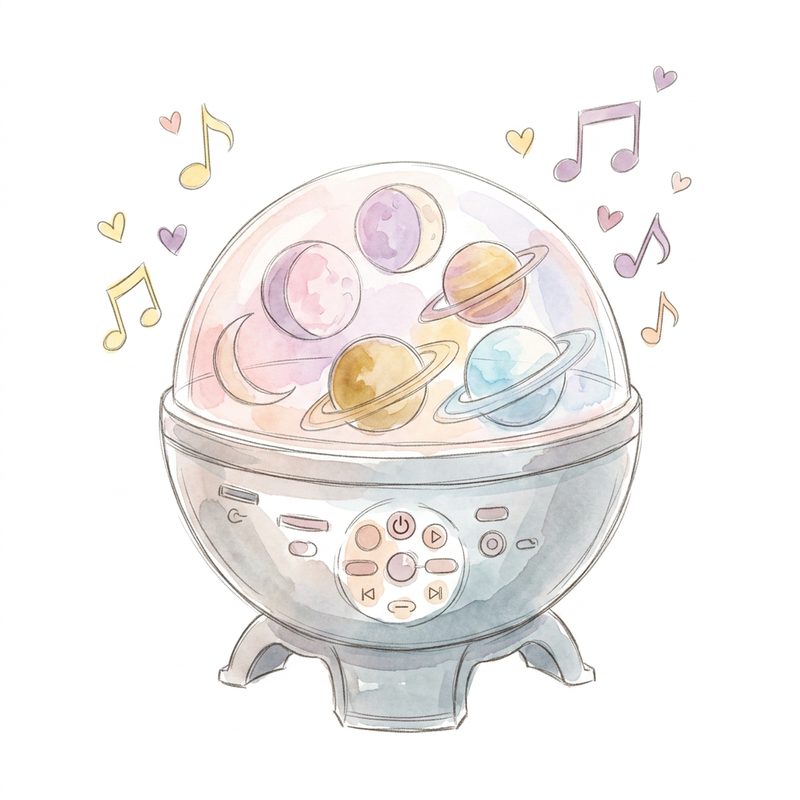
Bright Autism Calming Sensory Sea Lamp - Night Light Projector for Kids, 7 Light
Best for ages: 2+ yrs · Price: $25–$60 · Rating: 4.7/5
A slow-moving underwater projector turns one corner of any room into a calm-down spot. The slow visual pacing helps regulate an over-aroused nervous system the same way watching aquarium fish does.
View on AmazonWhat not to buy (yet)
- Fidget spinners. Most OTs do not recommend them for any age. They are visually distracting, require constant looking, and provide neither proprioceptive nor tactile input. Putty, sand, or a textured ring outperforms them every time.
- Weighted blankets for under 5. Documented suffocation risk; AAP guidance is clear. Use a weighted plush or lap pad instead, and only awake-with-supervision.
- Light-up, noise-making electronic toys. For autistic toddlers who are already sensory-overloaded, these add input that competes with regulation. Stick to passive, child-driven materials.
- "Autism app" tablets and screen-based interventions. The AAP recommends no screens before 18 months and only high-quality co-viewed programs from 18–24 months. There is no evidence that toddler screen apps improve autism outcomes; there is solid evidence excessive screen time worsens language acquisition (Madigan et al., JAMA Pediatrics 2019).
- Sensory chewables without a breakaway clasp. Strangulation risk. Non-negotiable.
How to introduce a new sensory toy without a meltdown
Autistic toddlers often need a slower introduction than the box label suggests. The pattern that works almost universally:
- Day 1: Put the toy on the floor near your child without comment. Let them watch it exist. Do not narrate. Do not invite. Just let it be in their world.
- Day 2–3: Play with it yourself while they are nearby. Hum a little. Don't perform.
- Day 4–7: Hand them one piece. Wait. If they hand it back, that is real communication and you celebrate the exchange, not the play.
- Week 2: Offer it during a transition that usually triggers dysregulation — before lunch, after waking, at the pediatrician. That is when sensory tools earn their keep.
How to know if a sensory toy is actually working
Keep a simple 10-day log on the fridge. Three columns: What happened, what tool we used, what we saw. Look for these signs of a hit:
- Faster recovery from a meltdown (15 minutes instead of 45)
- Longer engagement with the toy before moving on (3 minutes is a win at age 2)
- Spontaneous return to the toy without prompting
- Less stim during competing tasks (fewer hand flaps during the same picture book)
If 10 days produce none of those signs, the tool is not matched to your child's profile. That is data, not failure. Move on, try a different sensory channel (if you tried tactile, try proprioceptive next), and bring the log to your next OT session.
When to call in a professional
If your child is under 3, request an Early Intervention evaluation through your state's Part C program — it is free, federally mandated by IDEA, and does not require a diagnosis. If your child is 3 or older, the same evaluation responsibility passes to your local school district under IDEA Part B. Either route gets you OT and speech therapy at no cost. Our guide on how to request an IEP evaluation walks through the email script and timelines.
Frequently Asked Questions
References
- Ayres, A. J. (2005). Sensory Integration and the Child (25th Anniversary Edition). Western Psychological Services.
- Case-Smith, J., Weaver, L. L., & Fristad, M. A. (2015). A systematic review of sensory processing interventions for children with autism spectrum disorders. Autism, 19(2), 133–148.
- Centers for Disease Control and Prevention. (2023). Data and statistics on autism spectrum disorder. CDC.
- Council on Communications and Media, American Academy of Pediatrics. (2016). Media and young minds. Pediatrics, 138(5).
- Kuypers, L. M. (2011). The Zones of Regulation: A Curriculum Designed to Foster Self-Regulation and Emotional Control. Think Social Publishing.
- Madigan, S., Browne, D., Racine, N., Mori, C., & Tough, S. (2019). Association between screen time and children's performance on a developmental screening test. JAMA Pediatrics, 173(3), 244–250.
- Pellegrini, A. D., & Bohn, C. M. (2005). The role of recess in children's cognitive performance and school adjustment. Educational Researcher, 34(1), 13–19.
- Schilling, D. L., Washington, K., Billingsley, F. F., & Deitz, J. (2003). Classroom seating for children with attention deficit hyperactivity disorder: Therapy balls versus chairs. American Journal of Occupational Therapy, 57(5), 534–541.
- STAR Institute for Sensory Processing. (2024). About sensory processing disorder.
Affiliate disclosure: Some links above are Amazon affiliate links. If you buy through them, IEP Tutor may earn a small commission at no additional cost to you. We only recommend tools we would put in our own kids' hands. IEP Tutor is not a law firm and does not provide legal advice.
Reviewed by our Special Education Advisory Team
Our articles are reviewed by a team of certified special education teachers, Board Certified Behavior Analysts (BCBAs), and parent advocates with combined experience supporting thousands of families through the IEP process.
Was this article helpful?