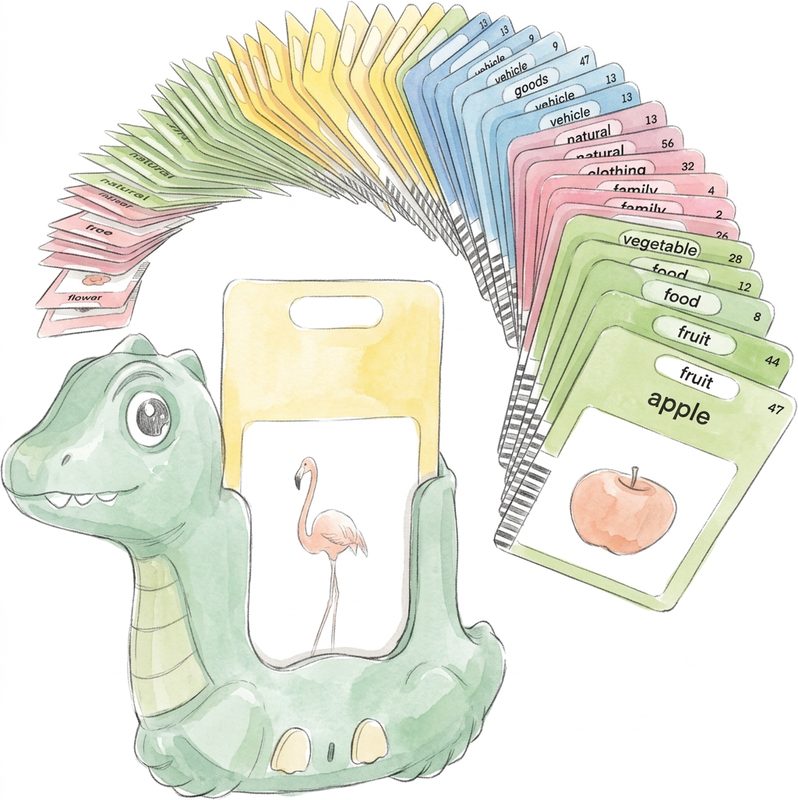
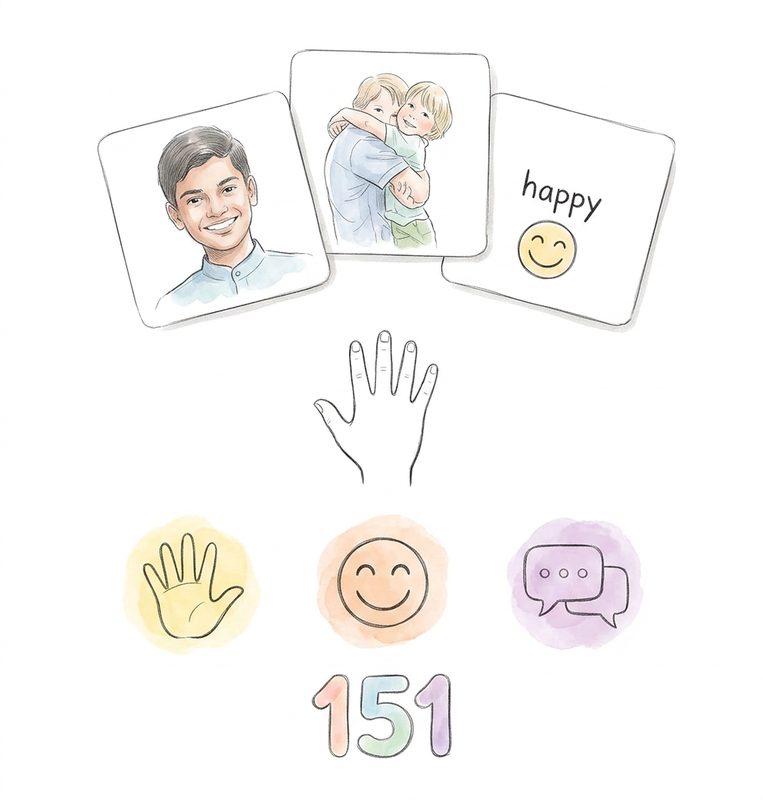
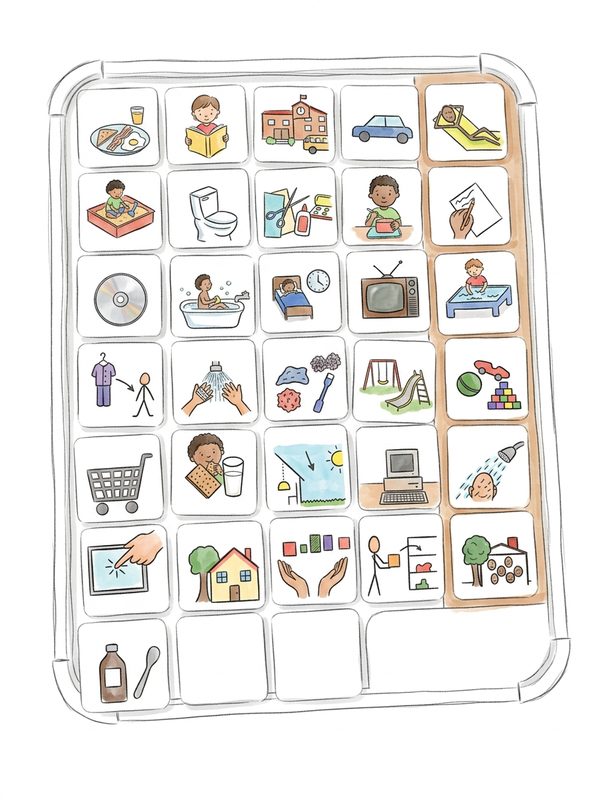
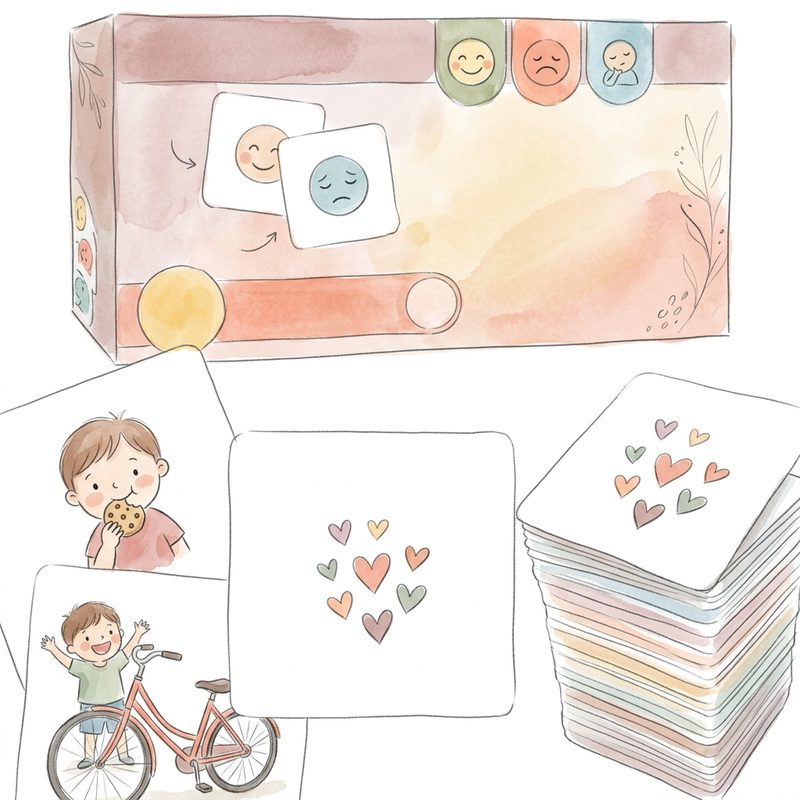
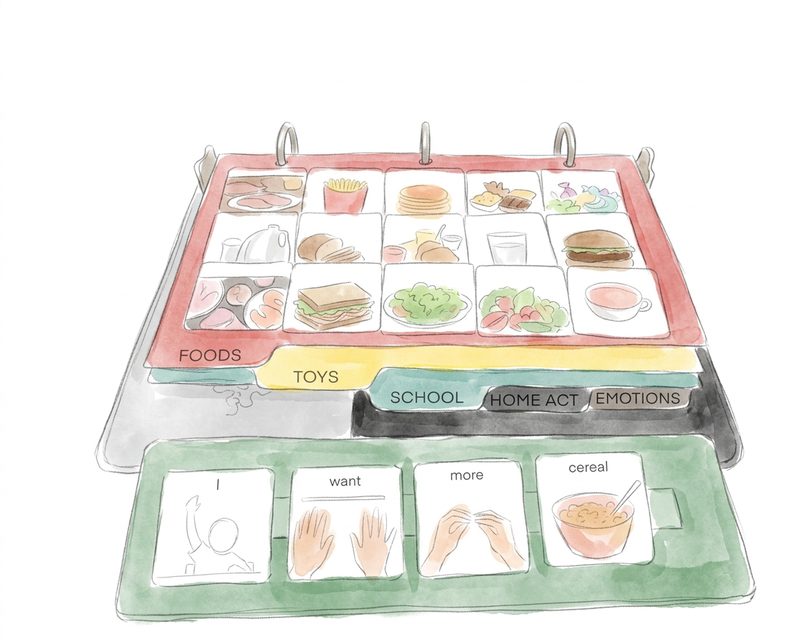
The right communication tool depends on your child's current communication level, motor skills, and cognitive abilities. For children just beginning to communicate, start with simple first-then boards or choice boards with 2–4 large pictures. Laminated picture cards with Velcro backing are durable and allow you to customize schedules. For children ready for more complex communication, a PECS-style book with organized categories (food, activities, feelings, places) provides greater expressive range. Mid-tech options like push-button communicators with recorded messages work well for children who need a voice output device but aren't ready for a tablet-based AAC app. If considering high-tech AAC (tablet apps like TouchChat, Proloquo2Go, or LAMP), consult your child's speech-language pathologist for a formal AAC evaluation first — many insurance plans and school districts will fund devices when properly documented. For visual schedules, consider where they'll be used most. Magnetic schedules work great on refrigerators, while portable mini-schedules with a ring clip travel well in backpacks.
 #1 Best Overall